
Ladakh's sparse population, dry weather and high altitude combine to make it one of the clearest night skies in the world.
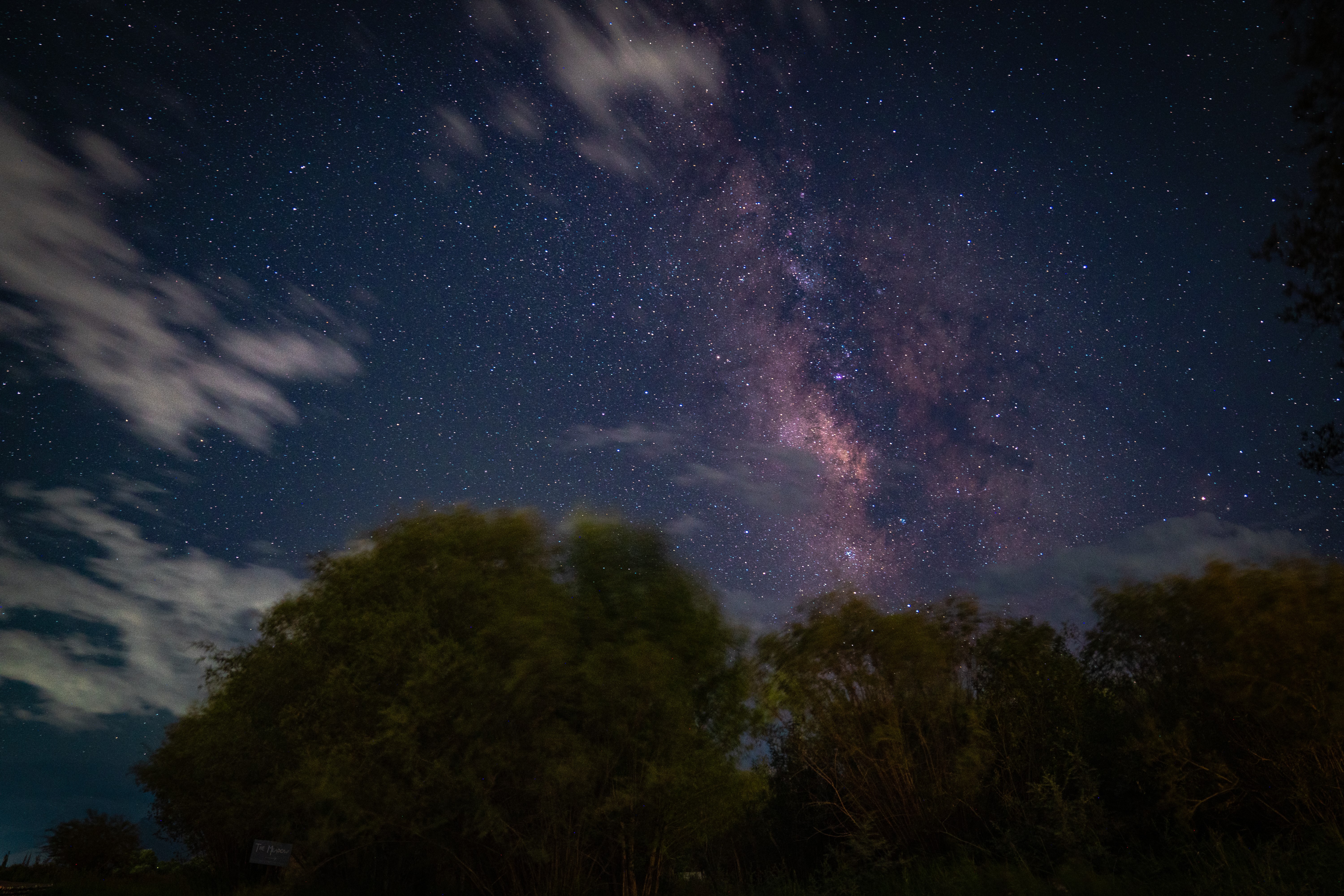
The Milky Way photographed from The Indus River Camp
Dark Skies at the Camp
Hanle in the Changthang region was recently designated a Dark Sky Reserve, but clear skies are found throughout Ladakh where development is sparse. Hanle features in several of our sample itineraries. At our property, we keep lighting to a minimum so you can see the stars clearly.
When the moon isn't bright, the Milky Way is visible to the naked eye: a faint, cloudy band arching across the sky. The galactic centre, in the constellation Sagittarius, appears as a bright bulge during summer months. Find a quiet spot away from lights (our riverside decks are ideal) and let your eyes adjust. Look out for shooting stars, satellites, and the occasional Starlink train.
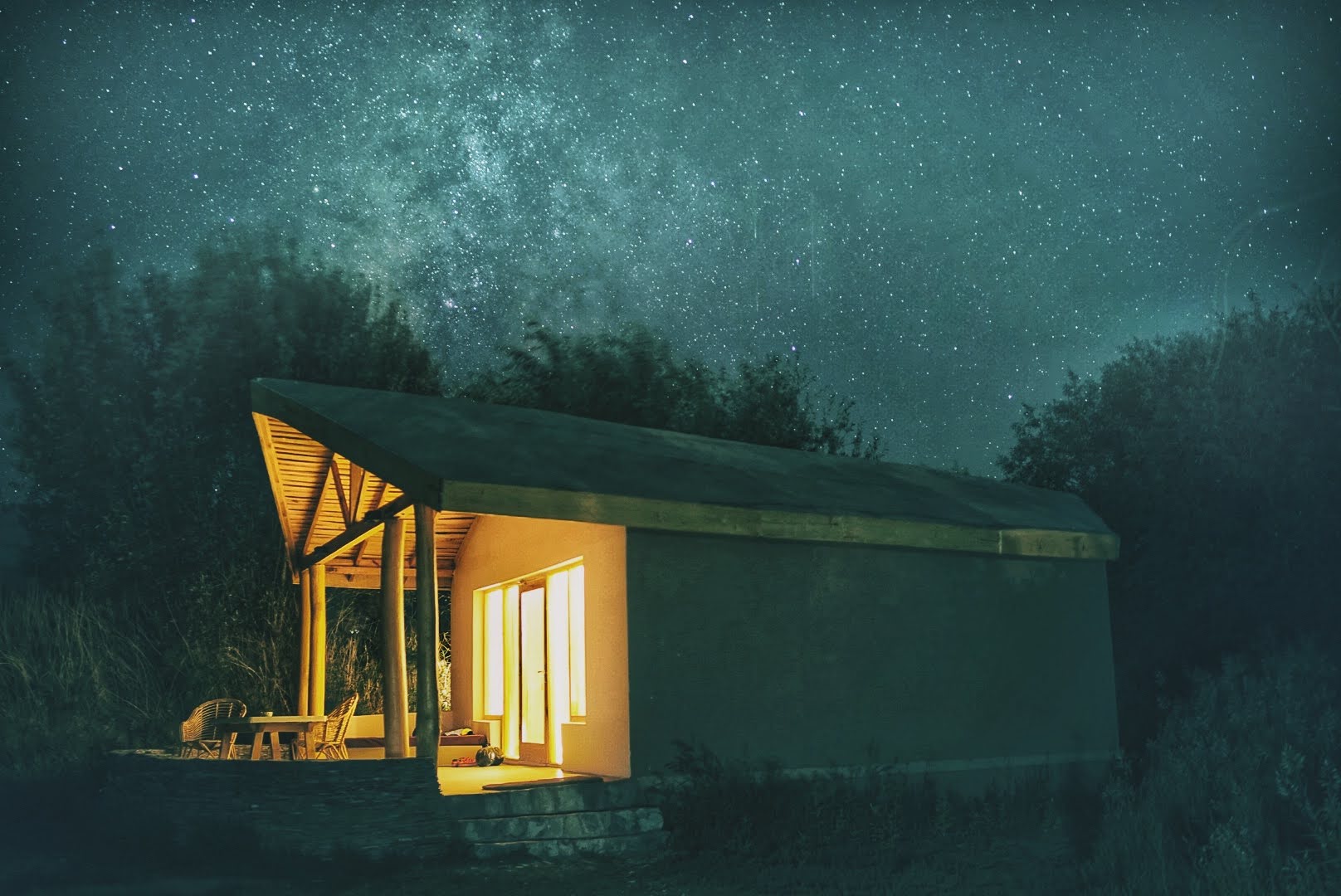
Dark skies over our riverside cottages
Constellations
The celestial sphere is an imaginary dome surrounding Earth, upon which all celestial objects appear fixed. Polaris, the North Star, close to the north celestial pole, remains in a fixed location. From the property, this appears in the direction of Leh, at a 30-degree angle from the ground. Any stargazing app can help you identify this, as well as the constellations.
The most easily recognizable constellation is Ursa Major (The Great Bear). This constellation contains the Big Dipper, which is visible year-round in Ladakh. The two outer stars of the Big Dipper's bowl point towards the North Star.
Other constellations to watch for:
- Ursa Minor (The Little Bear)
- Taurus (The Bull)
- Scorpius (The Scorpion)
- Cygnus (The Swan)
- Lyra (The Lyre)
Deep Sky Objects
Deep sky objects are celestial structures beyond our Solar System. Nebulae are vast clouds of gas and dust in space. Star clusters are groups of stars gravitationally bound together. The Hercules Cluster (M13) and Omega Centauri (NGC 5139) are two of the brightest globular clusters visible from Ladakh.
The Andromeda Galaxy is visible through the telescope. When viewing, deep sky objects will appear faint and abstract. It's important to consider just how far away these objects are. Andromeda is our closest galaxy, yet it is located 2.5 million light years away. We look deep into its past to view it. It appears in the telescope like a fuzzy cloud, rather than the photos online. It is 260,000 light years across with 1 trillion stars.
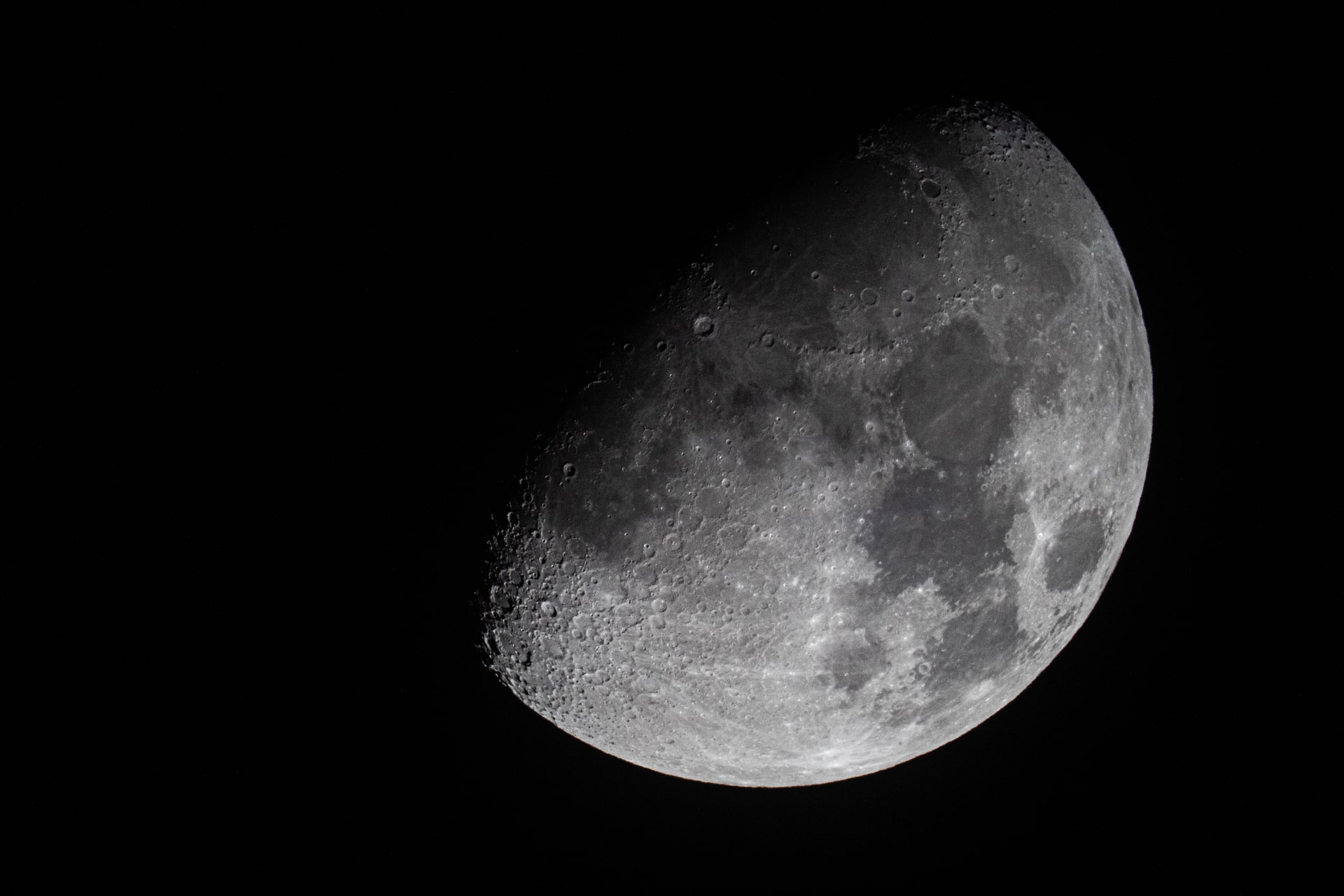
The moon photographed through our Celestron telescope
Astrophotography Tips
When photographing the Milky Way, use a wide-angle lens with a large aperture (f/2.8 or wider) to capture more light. Set your camera to manual mode and use a high ISO (1600 or higher). Use a sturdy tripod and a remote shutter release or timer to minimize camera shake during long exposures. Focus your lens to infinity and use live view to fine-tune the focus on a bright star. Experiment with exposure times between 15-30 seconds to capture the Milky Way without excessive star trails.
For photographing through our Celestron telescope, you would need a Canon or Nikon camera that can be mounted with our in-house T ring. Ask in advance of the evening so we can prepare.
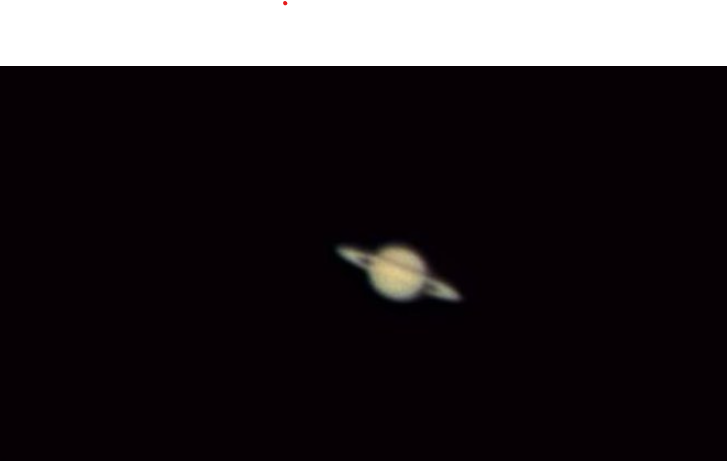
Saturn photographed through the telescope at the camp
What We Provide
Camp Facilities
- Motorised Celestron telescope (no charge)
- Campfire evenings under the stars
- Riverside decks away from lights for optimal viewing
- T ring adapter for Canon/Nikon cameras